My First Home
Fitting my grand delusions into a tiny farmhouse

How do you make a home?
In this age of Pinterest-perfect living rooms, of reels where twenty-two-year-olds with no carpentry skills casually renovate entire kitchens before lunch, it’s easy to fall for the delusion that it should all come together instantly—and on the first try.
For most of us, the reality is less cinematic. It involves a series of small, unremarkable decisions: where to put the table, what to hang on the wall, how to let the light in. You don’t think of it as building a philosophy. You think of it as arranging a room. Or, more accurately, moving the same chair around six times and calling it a breakthrough.
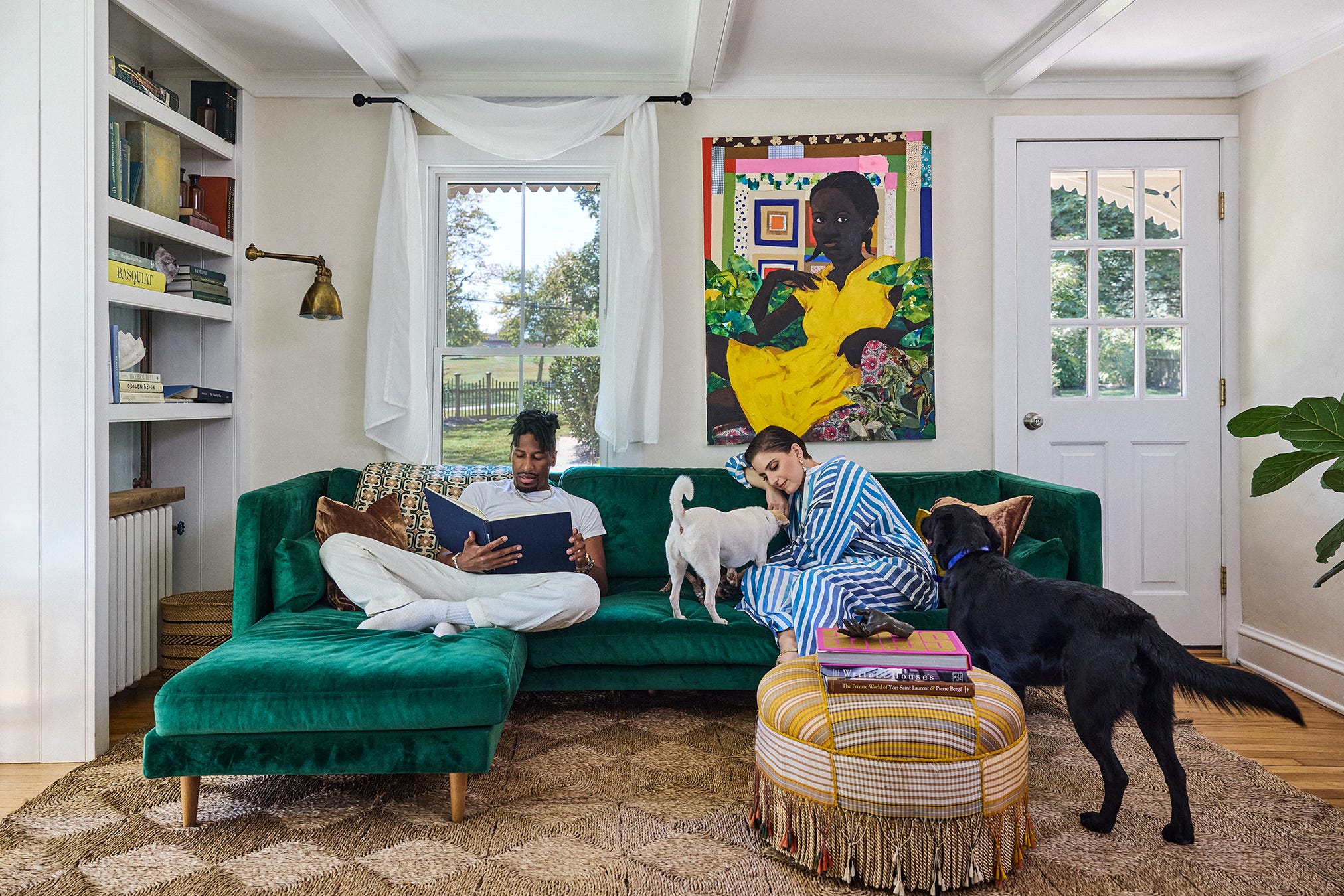
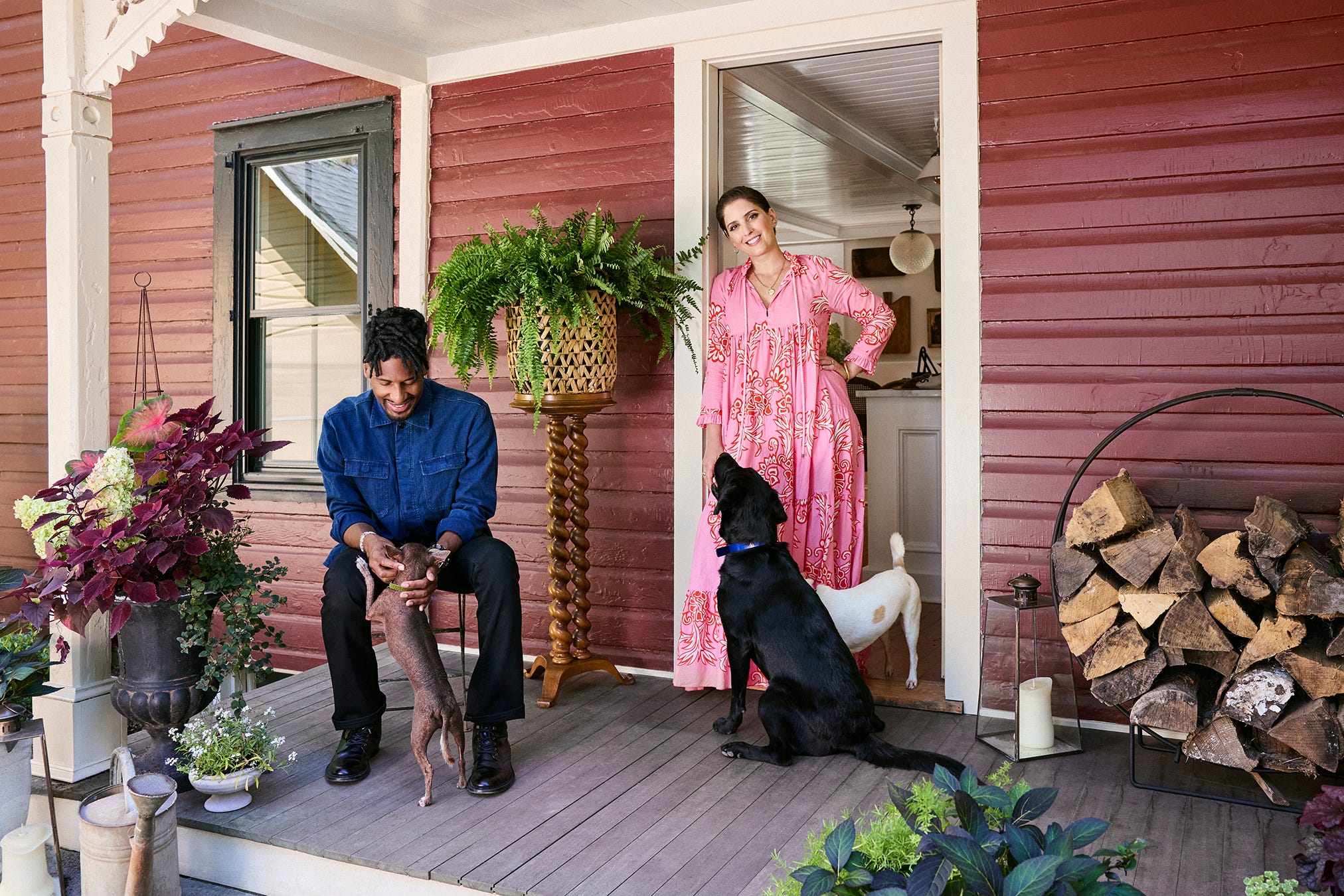
In my early thirties—before Jon and I were married, before so much of what would come—I bought my first home, a small farmhouse in the Delaware River Valley. I didn’t yet have language for what I was doing there. But I was, in my own way, trying to make a world. That house, and an accompanying essay I wrote, is featured in this month’s issue of Garden & Gun. It’s strange to see it in a glossy magazine—to see that house, that version of it, held still. Because it never felt still while we were living in it.
It was a place in motion. A place assembled in layers—Ikea furniture from our early twenties, odd collections of things found, bartered, thrifted, stooped, carried home with no clear rationale except that I loved them and they fit in the back of a taxi.
I had dreamed of owning a home since I was a kid. I spent my twenties scrolling real estate listings as a form of recreational delusion. I’d favorite homes with wraparound porches and soaking tubs and fireplaces and think, yes, this feels right for me, a person with $600 in her checking account.
At thirty-two, after years of saving, it finally happened. The farmhouse was a foreclosed property that had been quickly flipped—meaning everything looked fine until you looked slightly closer. I bought it on my own, on a budget, with the overinflated optimism of the uninitiated.
Jon and I moved in that December, bringing with us the full archive of our early adulthood—his modern, mine more…unresolved. Flimsy bookshelves. A fake Eames chair from Craigslist. My thrifted textiles, flea market finds, objects collected on travels—many of which I could not defend in a court of law.
We didn’t try to make it cohesive. We just moved in. Lived in it. Let it be a little awkward, a little mismatched. There’s a particular intimacy to a home that isn’t trying too hard. It was, I think now, a kind of permission: to begin with what we had. To build slowly. To let our home grow as we did.
Over time, the house changed constantly—rooms rearranged, objects repurposed, things layered in and taken away. I see it now as a first draft—one with many revisions. Some regrettable, some inexplicably excellent—all of them an education in composing a life through space.
There are a few objects I think of now as its early sentences:
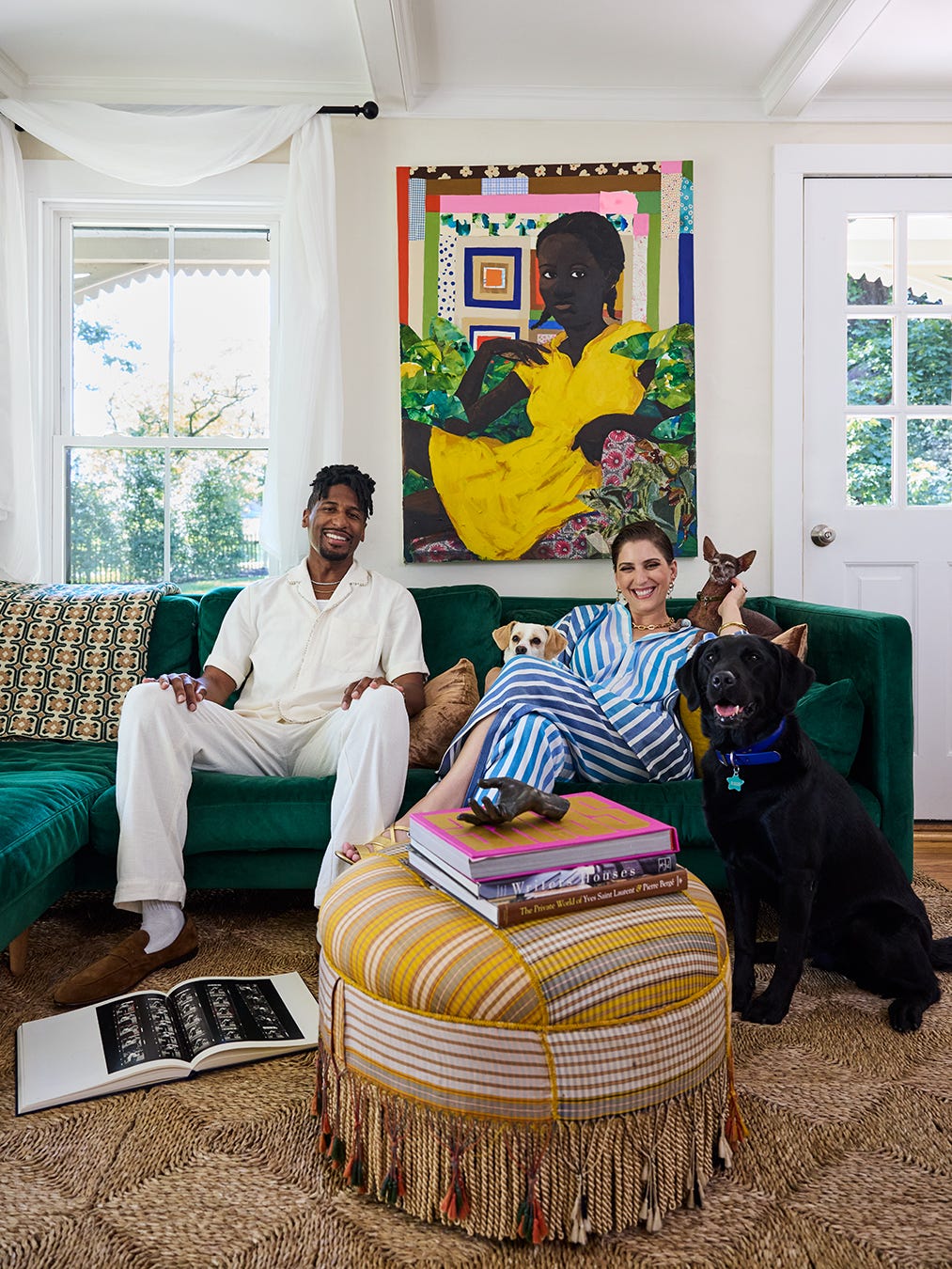
1. An ottoman I ordered off Amazon—deeply unremarkable, the color of bad makeup foundation. When I couldn’t stand looking at it anymore, I went to the corner of my closet where I’d stuffed my collection of textiles, pulled out an old Tunisian tablecloth, and threw it over the ottoman. I liked the way it looked, so I pinned it in place—which is exactly as stable as it sounds. It stayed like that for longer than I care to admit. Eventually, I enlisted my friend Karine to upholster it properly.
It was a small thing, but it felt like a kind of unlock: the realization that I could approach my home as an extension of my creative process—improvised, iterative, allowed to begin before I knew exactly what I was doing.


2. A windfall of French antique cutting boards I found on Facebook Marketplace. Twenty of them, for $200, inherited from the seller’s aunt, which somehow made the acquisition feel urgent. When I returned home proudly carrying my haul, Jon looked at me like I had absolutely lost the plot.
Why do we need twenty cutting boards?
I didn’t have a good answer. I still don’t, exactly. But they had this worn softness to them, a patina that made me feel like they already understood something about living. I hung them on the kitchen wall, which is not where cutting boards traditionally go, and suddenly they became something else—functional, yes, but also a kind of accidental art installation. A reminder that sometimes you don’t need to choose between usefulness and beauty. You can just confuse the categories entirely.


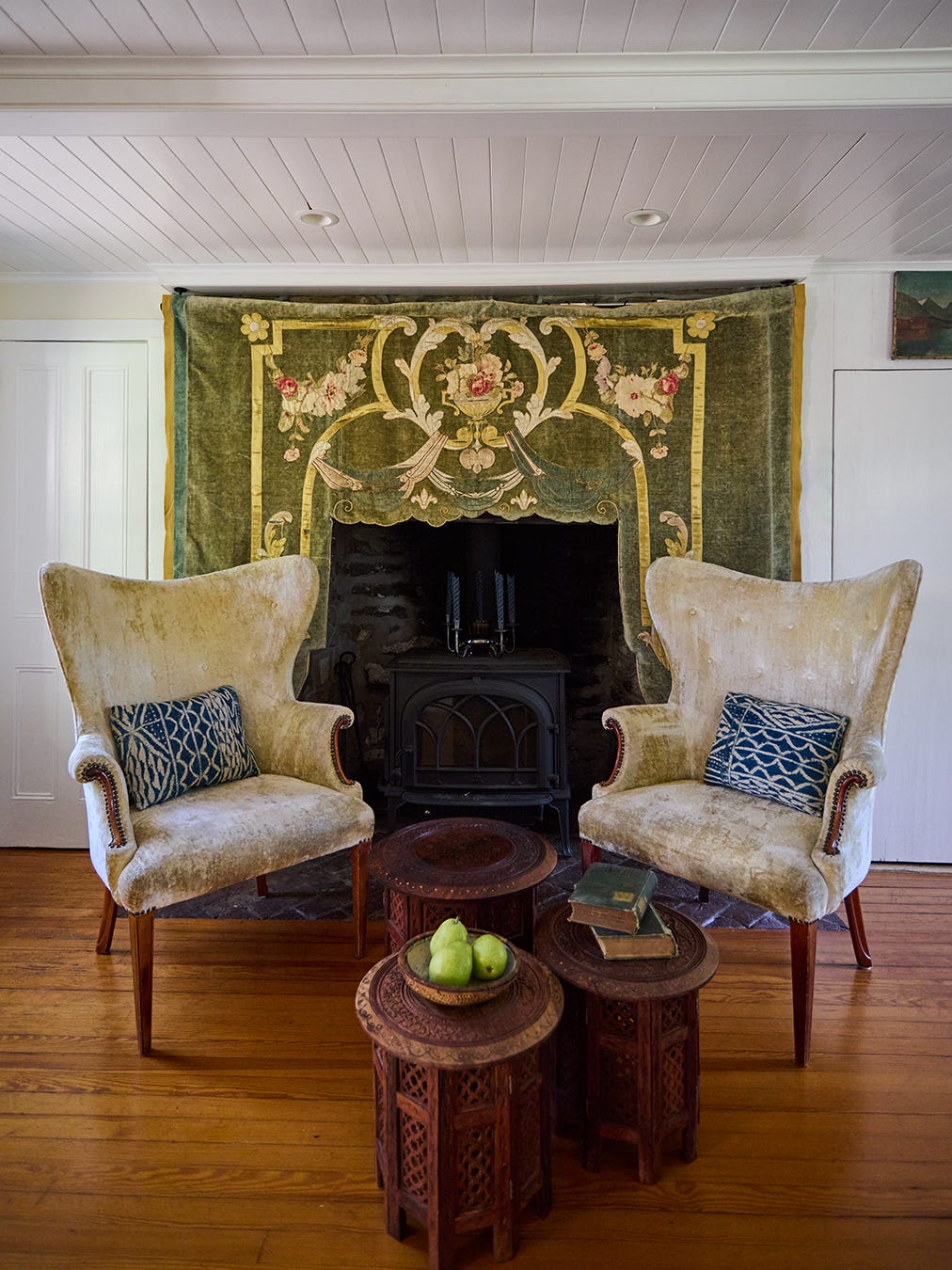
3. A fireplace makeover. The fireplace in the kitchen didn’t work—literally and aesthetically. Huge. Overwhelming. Severe. The kind of feature that makes you think, this could be something, while offering no clear path to making it so.
I didn’t have the budget to make it functional, so I went on Facebook Marketplace. I found a cast-iron woodstove in rural Pennsylvania. The seller loaded it into the back of my parents’ Subaru with a forklift, which felt like a strong opening move. I drove home feeling extremely capable, only to realize I had no plan for getting it out of the car. Our neighbor Jody helped me slide it down a plank and into the house, vociferously questioning my life choices as we went.
Once the woodstove was installed, we removed the unsightly mantel and corbels. For a while, the whole thing just sat there, unresolved—a theme.
The pièce de résistance came in the form of an antique French valance. I had thrifted it months earlier, with no idea what it was for. It lived folded among other mysterious objects until one day I held it up to the fireplace and realized it fit perfectly, which felt, frankly, like a small miracle—a way to usher in both character and coziness.
Later, I learned there was a whole history for this—in the 19th century, people used pelmets, sometimes called “mantel scarves,” to soften harsh fireplace surrounds, especially in homes they couldn’t fully alter. Small interventions—decorative, but also practical, helping with drafts and disguising what couldn’t be fixed.
From that point on, anytime someone asked if it was a fire hazard, I defended it as “historically grounded.”


Looking back, I can see the pattern more clearly. I wasn’t decorating so much as negotiating—with the space, with my limitations, with my very strong desire to make things feel a certain way without always knowing how. Layer by layer, object by object, the house took shape. Or maybe more accurately: I did.
I didn’t know it then, but I was already drafting something—not just a home, but a way of living inside one. A belief that beauty can be assembled slowly and imperfectly, that meaning can be layered in, that a life, like a room, doesn’t arrive fully formed.
You make it, and then you keep making it.

Four objects I can’t stop thinking about (unfortunately), so please go ahead and acquire them in my stead
I am in love with these placemats and runner, made from European grain sacks from the 1800s. The runner is a shape-shifter: rug, table runner, couch cover for dogs, emotional support textile. The pattern play is nonsensical in the most wonderful way. And then there’s that magenta stripe, which has me fully swooning.
Books keep entering my life at an unsustainable rate, so I’m always on the hunt for interesting bookends. I like to remove the covers from my hardbacks—there’s usually gold or silver lettering on the spine, and I enjoy the way the titles glint in the light. These brass swan bookends (with perfect patina) amplify the whole situation: glamorous, slightly unnecessary, and exactly right.
Currently coveting these stripey, handmade raffia lamps with an intensity that feels worthy of discussing with my therapist. They’re giving whimsical seaside seersucker circus. Say that four times fast. They add pizzazz to any room and cast the kind of soft light that forgives you for everything—your clutter, your choices, your general lack of a system. I imagine them whispering, it’s fine, it’s all fine—life is but a game of vibes.
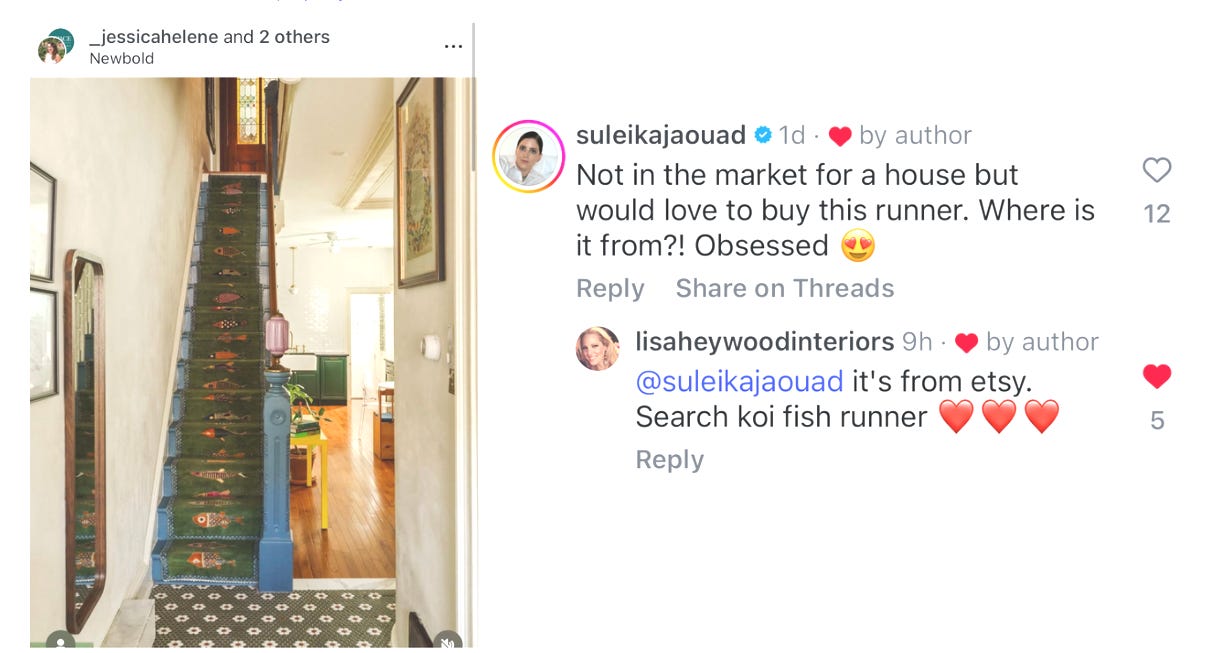
I had never considered a staircase as the aesthetic centerpiece of a home, but a fish rug that looks like a painting will apparently change a person. A photo of a house for sale in Philadelphia popped up in my feed and I became immediately fixated—the fish in motion, the painted wood treads, the tiny pink lamp on the newel post. Genius.
I’m usually a silent lurker, but this felt like my moment to become a person who comments. It turns out, the fish rug is from Etsy. The excitement I felt was overwhelming. Should we all have matching staircases?